
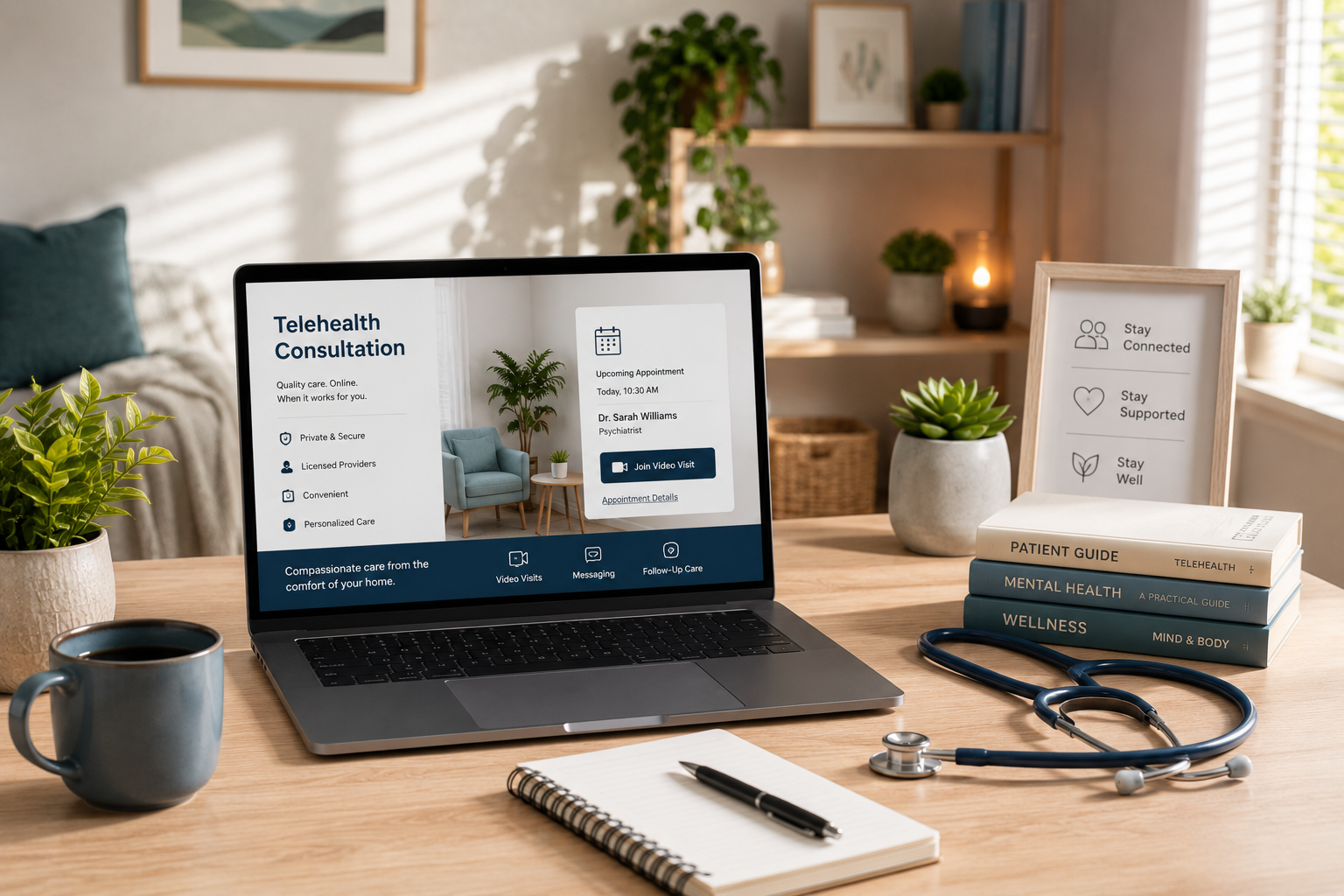
What is telehealth?
Telehealth allows healthcare professionals and patients to meet through secure video or other approved digital communication instead of every visit requiring travel to an office.
For many patients, this can make care easier to fit into work, family responsibilities and everyday routines.
Telehealth is not appropriate for every situation, but it can be a valuable part of a connected care plan.
When can telehealth be useful?
Telehealth may be a practical option for patients who want more convenient access to appropriate healthcare services.
Telehealth is part of care, not a replacement for every in-person service
Some concerns can be managed effectively through virtual visits, while others require physical examination, testing or in-person evaluation.
The appropriate setting depends on symptoms, healthcare needs, safety considerations and clinical requirements.
Urgent or emergency symptoms and concerns requiring hands-on examination may need in-person or emergency care instead of a routine virtual visit.
What happens during a telehealth visit?
A virtual visit follows many of the same basic principles as an in-person consultation while using secure digital communication.
Prepare for the visit
Use a private location, reliable internet connection and compatible device.
Connect with your provider
Discuss symptoms, history, questions and current concerns.
Review next steps
Your provider may discuss recommendations, follow-up or additional evaluation.
Stay connected
Use the Visit-E platform for ongoing access and communication related to your care.
What can be discussed during a telehealth consultation?
Virtual consultations can support many different healthcare conversations when telehealth is clinically appropriate. Patients may use a visit to discuss new or ongoing symptoms, review medications, ask questions about treatment, talk through mental health concerns or follow up after a previous appointment.
The exact scope of a visit depends on the service being provided, your health history and whether a physical examination or diagnostic testing is needed.
Preparing for your online appointment
A little preparation can make a virtual visit more comfortable and productive. Choose a private location where you can speak openly, test your camera and microphone in advance and make sure your internet connection is stable.
It can also help to have a current medication list, relevant health information and a short list of questions nearby. If you are discussing symptoms that have changed over time, writing down when they started and what makes them better or worse may help the conversation.
What to expect during the visit
Your healthcare professional will usually begin by reviewing the reason for the appointment and asking questions about current symptoms, relevant history and everyday functioning. Depending on the purpose of the visit, the conversation may include previous treatment, medication response, sleep, stress, mood, recent changes or other health concerns.
At the end of the appointment, your provider may discuss recommendations, follow-up, additional evaluation or whether an in-person examination is needed.
Benefits of telehealth
Telehealth can reduce travel time and make appropriate care easier to fit around work, family responsibilities and daily routines. It may also improve continuity for patients who live farther from a clinic, have mobility limitations or simply prefer the privacy of a familiar environment.
Convenience does not mean care should feel impersonal. A well-designed telehealth experience should still give patients time to ask questions, explain concerns and understand the next step.
Mental health care through telehealth
Many mental health services can be provided virtually because evaluation and follow-up often rely heavily on conversation, history, symptom review and ongoing monitoring. Telehealth may be used for psychiatric evaluation, depression and anxiety care, ADHD-related concerns, medication follow-up and other behavioral health services when appropriate.
Individual circumstances still matter. A clinician may recommend in-person care if safety concerns, examination needs or other clinical factors make virtual care unsuitable.
What telehealth can support
Virtual care can be used across multiple parts of the healthcare journey when clinically appropriate.
Consultations
Discuss symptoms, concerns and health history with a healthcare professional through a virtual appointment.
Follow-up care
Review progress, treatment response and new concerns without unnecessary travel.
Care coordination
A connected digital experience can help keep communication and next steps easier to manage.
Follow-up and ongoing care
Healthcare often works best as an ongoing process rather than a one-time conversation. Follow-up visits can help review progress, answer new questions and determine whether the care plan needs to change.
Visit-E is designed to make that digital side of care easier to navigate by keeping patient access, virtual appointments and communication connected in one experience.
Privacy and confidentiality
Privacy is an important part of telehealth. Patients should use a private location whenever possible and avoid discussing sensitive health information where other people can overhear the conversation.
Visit-E is designed to provide a secure patient experience for virtual healthcare access. Patients should also follow any privacy and security instructions provided by their healthcare professional.
Telehealth care at Visit-E
Visit-E combines convenient virtual access with a patient-centered digital experience. Our goal is to make professional care easier to reach while helping patients feel informed, supported and connected throughout the healthcare journey.
From accessing your account to attending virtual appointments and continuing follow-up, Visit-E is designed to make healthcare feel clearer and less complicated.
When is telehealth not enough?
Urgent or emergency symptoms, or concerns requiring hands-on examination or testing, may require in-person or emergency medical care.