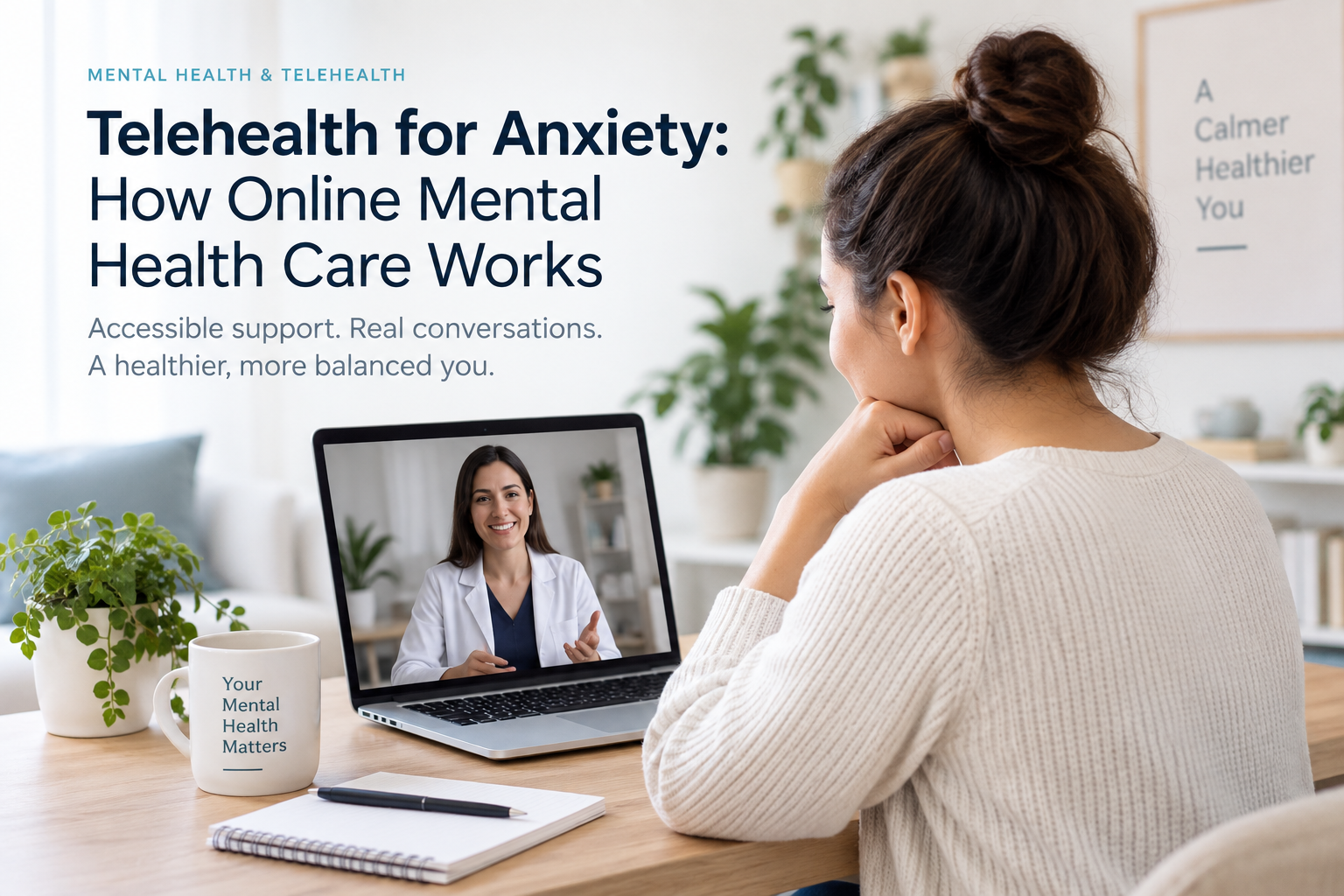
Telehealth can be an effective way to receive mental health assessment and treatment for anxiety. A virtual visit may include a detailed discussion of symptoms, medical history, daily functioning, treatment goals, therapy options and, when clinically appropriate, medication management. Virtual care is not right for every situation, and some symptoms require in-person or emergency evaluation.
Feeling anxious before an important event is a normal human response. But when worry, fear or physical symptoms become persistent, difficult to control or disruptive to daily life, it may be time to seek professional help. For many people, that first conversation no longer has to begin in a traditional office.
Telehealth—sometimes called telemedicine or virtual care—allows patients and healthcare professionals to meet remotely, commonly through secure video technology. Mental health services are particularly well suited to many forms of virtual care because much of an evaluation depends on careful conversation, history-taking, symptom assessment and ongoing follow-up.
This guide explains what online anxiety care can involve, what happens during an appointment, how anxiety is evaluated, which treatment approaches may be discussed, and when virtual care may not be enough.
What Is Telehealth for Anxiety?
Telehealth for anxiety is mental health care delivered remotely rather than in the same physical room as the clinician. Depending on the provider, clinical situation and applicable rules, virtual mental health services can include assessment, diagnosis, psychotherapy, treatment planning, medication-related care and follow-up appointments.
A telehealth appointment should still be a real clinical encounter. The goal is not simply to complete an online questionnaire or receive generic advice. A qualified professional needs enough information to understand your symptoms, how they affect your life, relevant medical and psychiatric history, current medications and other factors that may influence treatment.
Why people consider virtual anxiety care
Eliminating travel can make appointments easier to fit around work, family and other responsibilities. Some patients also feel more comfortable discussing anxiety from a familiar private environment.
Anxiety vs. Normal Stress: When Does Worry Become a Concern?
Anxiety itself is not automatically a disorder. Temporary worry can occur before a job interview, examination, medical procedure, financial decision or major life change. The important questions are how intense the symptoms are, how long they last, whether they are difficult to control and how much they interfere with everyday functioning.
Persistent anxiety may affect work performance, school, sleep, relationships, decision making and the ability to complete ordinary responsibilities. Some people experience primarily emotional symptoms, while others first notice physical sensations such as muscle tension, stomach discomfort, sweating or a racing heartbeat.
| Everyday Stress or Worry | Possible Anxiety Disorder |
|---|---|
| Often connected to a specific situation | May persist even when no immediate threat is present |
| Usually decreases when the stressor passes | Can continue for weeks, months or longer |
| Generally remains manageable | May feel difficult to control |
| Limited effect on daily functioning | Can interfere with work, school, sleep or relationships |
These distinctions are general examples. Anxiety disorders include several different conditions, and symptoms can overlap with medical problems, medication effects, sleep problems, substance use and other mental health conditions. A professional evaluation helps clarify what may be contributing to the symptoms.
What Anxiety Symptoms Can Be Discussed During Telehealth?
You do not need to know the name of a diagnosis before scheduling a mental health appointment. Describing what you have been experiencing is enough to begin the conversation.
Emotional and cognitive symptoms
- Persistent or excessive worry
- Feeling nervous, tense or “on edge”
- Difficulty controlling worry
- Fear that something bad will happen
- Difficulty concentrating
- Irritability
- Avoidance because of fear
Physical and behavioral symptoms
- Restlessness
- Muscle tension
- Sleep problems
- Fatigue
- Sweating or trembling
- Feeling lightheaded or short of breath
- Changes in daily routines
Panic-like symptoms can also be discussed during a virtual assessment. However, new or severe chest pain, significant breathing difficulty, fainting or other potentially serious physical symptoms should not automatically be assumed to be anxiety. Depending on the circumstances, urgent medical evaluation may be necessary.
What Happens During the First Online Anxiety Appointment?
The first appointment is usually focused on understanding the whole picture rather than immediately choosing a treatment. The clinician may ask about when symptoms began, how often they occur, what seems to trigger them and how they affect daily life.
1. Your current concerns
You may be asked to describe the main reason you are seeking care. Specific examples—such as trouble sleeping because of worry, avoiding social situations, difficulty concentrating at work or repeated panic symptoms—can help.
2. Symptom history
The clinician may ask when symptoms started, whether they have changed over time, how frequently they occur and whether you have experienced similar periods before.
3. Medical and mental health history
Relevant medical conditions, previous diagnoses, past treatment, family history, sleep patterns and recent life changes can all provide important context.
4. Medications and substances
Be prepared to discuss prescription medications, over-the-counter medicines, vitamins, supplements, caffeine, alcohol and other substances. Some can influence anxiety symptoms or interact with treatment.
5. Daily functioning and safety
A mental health assessment may include questions about work or school, relationships, sleep, appetite and ability to manage normal responsibilities. Clinicians may also ask direct safety questions; these are routine and important parts of mental health care.
Can Anxiety Be Diagnosed Through Telehealth?
In many situations, mental health assessment and diagnosis can be performed through telehealth. The clinician uses your history, symptoms, duration, severity, functional impact and other clinical information to determine whether symptoms are consistent with an anxiety disorder or whether another explanation should be considered.
Virtual care does have limits. A clinician may recommend an in-person physical examination, laboratory testing or evaluation by another healthcare professional when symptoms could have a medical cause or when additional information is needed.
An online screening test is not the same as a diagnosis
Questionnaires can help identify symptoms and track changes, but a score alone does not establish a diagnosis. Clinical context matters.
How Is Anxiety Treated Through Telehealth?
Treatment depends on the type and severity of symptoms, medical history, preferences, previous treatment response and other individual factors. There is no single treatment plan that is right for everyone.
Psychotherapy
Psychotherapy—often called talk therapy—can be delivered virtually. Cognitive behavioral therapy (CBT) is one well-studied approach used for several anxiety disorders. It can help people identify patterns of thinking and behavior that contribute to anxiety and practice more useful responses.
Depending on the condition, therapy may also incorporate exposure-based strategies, behavioral techniques, problem-solving, relaxation skills or other evidence-based approaches.
Medication management
Medication may be considered for some patients when clinically appropriate. A prescribing clinician considers the diagnosis, symptom severity, medical history, other medications, potential benefits, possible adverse effects and patient preferences before making a recommendation.
Medication should not be started, stopped or changed based on general online information. Treatment decisions need to be individualized and discussed with the prescribing healthcare professional.
Lifestyle and supportive strategies
Sleep, physical activity, caffeine intake, stress management and social support can influence anxiety symptoms. These strategies may complement professional treatment but should not be treated as substitutes for needed care.
Benefits and Limitations of Online Anxiety Care
Potential benefits
- No travel for the virtual appointment
- Easier scheduling for some patients
- Access from a familiar environment
- Useful for ongoing follow-up
- Can expand access when local options are limited
Potential limitations
- Requires reliable technology and internet
- Finding a private space may be difficult
- Some symptoms require physical examination or testing
- Not appropriate for every urgent situation
- Availability can depend on location and provider licensing
How to Prepare for a Telehealth Anxiety Appointment
A few minutes of preparation can help you spend more of the appointment discussing your health rather than searching for information.
- Write down your main symptoms and when they started.
- List prescription medications, over-the-counter products and supplements.
- Note major recent stressors or life changes.
- Prepare questions you want answered.
- Choose a quiet, private location.
- Test your camera, microphone and internet connection.
- Join a few minutes early.
Questions you may want to ask
- What could be contributing to my symptoms?
- Do my symptoms fit a particular anxiety disorder?
- Would therapy be appropriate for me?
- What are the potential benefits and risks of treatment options?
- How will we know whether treatment is working?
- When should I schedule follow-up?
When Is In-Person or Urgent Medical Care More Appropriate?
Telehealth is useful, but it is not a replacement for every type of medical care. A clinician may recommend in-person evaluation when a physical examination, laboratory testing, diagnostic procedure or closer observation is needed.
New or severe physical symptoms should not automatically be attributed to anxiety. Severe chest pain, major breathing difficulty, fainting, sudden neurological changes or other potentially life-threatening concerns require prompt medical evaluation. A mental health emergency also requires immediate assistance rather than waiting for a routine telehealth appointment.
Telehealth for Anxiety With Visit-E
Visit-E is designed to make professional healthcare easier to access through a modern digital experience. Patients looking for virtual care can learn more about our Telehealth Consultations, while those specifically concerned about persistent worry, fear or related symptoms can review our Anxiety Care information.
The right next step depends on the individual. An evaluation can help determine whether symptoms are consistent with an anxiety condition, whether additional medical assessment is appropriate and which treatment options may fit your needs.
Frequently Asked Questions About Telehealth for Anxiety
Is telehealth effective for anxiety?
Virtual mental health care can be effective for anxiety disorders. Whether it is appropriate for a particular person depends on symptoms, clinical needs, access to technology and whether in-person examination or other services are required.
Can I talk to a provider online even if I am not sure I have an anxiety disorder?
Yes. You do not need to diagnose yourself before seeking help. A clinical assessment begins with your symptoms, history and concerns.
Can anxiety medication be discussed during a telehealth appointment?
Medication options may be discussed when appropriate. Prescribing decisions depend on clinical assessment, medical history, applicable laws and the clinician's professional judgment.
Do I need special equipment for a virtual appointment?
Typically you need a compatible phone, tablet or computer, an internet connection, working audio and, for video appointments, a camera. A private location is also important.
What if my anxiety symptoms have a physical cause?
Some medical conditions and medications can produce symptoms that overlap with anxiety. Your clinician may recommend medical evaluation, testing or an in-person examination when appropriate.
How should I prepare for my first appointment?
Make a list of symptoms, medications and supplements, important health history, recent stressors and questions you want to discuss. Test your technology before the appointment.
Is telehealth appropriate during a mental health emergency?
A routine virtual appointment is not a substitute for emergency services. If there is immediate danger or a life-threatening emergency, seek emergency assistance immediately.
Final Thoughts
Anxiety can look different from one person to another. For some, it is constant worry. For others, it appears as sleep problems, avoidance, physical tension, panic symptoms or difficulty concentrating. What matters is whether the symptoms are affecting your well-being and daily life.
Telehealth can provide a practical entry point to professional mental health care. A thoughtful evaluation can help clarify what is happening and create a treatment plan based on your individual needs rather than generic advice.
This article is for general educational purposes only and does not provide medical advice, diagnosis or treatment. Individual treatment decisions should be made with a qualified healthcare professional who has evaluated your specific circumstances.